Connect-the-Dots

Connect-the-Dots

In today’s rapidly changing business environment, R&D organizations must constantly renew their technology strategies by leveraging both internal and external knowledge. The internal knowledge of an organization represents a unique understanding of its business models and technologies. However, internal knowledge is often limited by the organization’s current perspective, which may not always reflect market trends.

In order for organizations to gain a broader perspective and formulate strategies with the most up-to-date knowledge, external sources are valuable because they provide new perspectives and ideas. By combining external and internal knowledge, organizations can develop powerful strategies — but they will need a strategic and thoughtful approach to overcome the following challenges:

Key Challenges in Leveraging External Knowledge

  • A key component of leveraging external knowledge is the search and extraction of relevant information. This is a time-consuming and resource-intensive process that requires significant expertise and a thorough understanding of the current needs of R&D organizations and industries.
  • Moreover, global information sources are increasing exponentially, and data can be found across a wide range of platforms, websites, and databases. Teams that successfully source relevant information, therefore, gain access to opportunities that others miss.
  • To ensure accuracy and completeness, analysts must also connect and analyze the extracted information, as well as triangulate findings from multiple sources.
  • Finally, as part of the research process, developing an insightful report plays an important role — it ensures that key findings are effectively communicated, ultimately supporting R&D organizations in their overall decision-making process.

As a result, SciTech Patent Art (SPA) has developed a platform for connecting-the-dots across many data sources, adopting a highly time-efficient hybrid approach based on Machine Learning, Deep Web crawling, and manual analyst curation. Using high-quality curated data, the platform allows users to connect the dots seamlessly and, in effect, simplifies the entire insight generation process.

The work process for developing a customized CONNECT-THE-DOTS solution involves the following steps:

defining-a-sandbox

A. Defining a Sandbox

To gather the most relevant information, teams must first define clear boundaries and requirements across four key areas:

  1. Technology boundary: Analysts identify the specific technologies to explore — including emerging fields, competitor products, or targeted companies — to ensure the search stays focused and relevant.
  2. Data sources: Depending on project needs, teams draw from patents, scientific literature, clinical trials, market research reports, government-published data, industry reports, and product information. Each project uses the combination that delivers the most valuable insights.
  3. Requirements for curation: Subject matter experts develop a structured taxonomy to standardize and categorize information, making it straightforward to review, filter, and interpret.
  4. User interface requirements: The interface is fully customizable — supporting charts, graphs, maps, and other visualizations, along with interactive features such as filtering, sorting, data downloads, and drill-down capabilities.

B. Tool Development:

Building an Intuitive Platform for Client Scientists

Our IT team follows a systematic, collaborative process to develop platforms that scientists find easy and effective to use. The six key stages are:

  1. Communication: From the start, our experts work closely with client scientists to align curation standards with their specific research requirements.
  2. User trial: Once development is complete, we run structured user trials to gather direct feedback and confirm the platform performs intuitively in real-world conditions.
  3. Refinement and finalization: Based on trial findings, our team fine-tunes the taxonomy, interface design, and underlying data before final deployment.
  4. User account setup: After finalization, we create user accounts, assign access permissions, and provide hands-on training so every scientist can get started with confidence.
  5. Data update requirements: To keep the platform current, we establish regular data feeds from external sources and carry out ongoing data validation to maintain accuracy and relevance.
  6. Custom technical requirements: Where needed, our IT team handles additional requests — such as custom analytics features, specialized reporting, or integration with existing software systems.

Why SciTech Patent Art

SciTech Patent Art is a 20+ year technology and patent intelligence firm specializing in patent and scientific literature analysis. With a team of over 100 scientists and technologists, we use Machine Learning tools to surface insights from diverse data sources for clients around the world.

Although AI and ML deliver fast results, they do not always provide the depth and context that scientists need for confident decision-making. For this reason, our CONNECT-THE-DOTS solutions combine human expertise, domain knowledge, and ML algorithms to deliver a more thorough and reliable approach.

Consequently, R&D organizations gain access to unique insights from public information that would otherwise go unnoticed. CONNECT-THE-DOTS is therefore an effective platform for helping teams explore opportunities and make well-informed decisions throughout their research and development activities.

Key Benefits of CONNECT-THE-DOTS

  • Highly focused data sets: By excluding noise, the platform helps clients quickly locate the most relevant information. Our subject matter expert analysts curate results specifically according to each client’s needs.
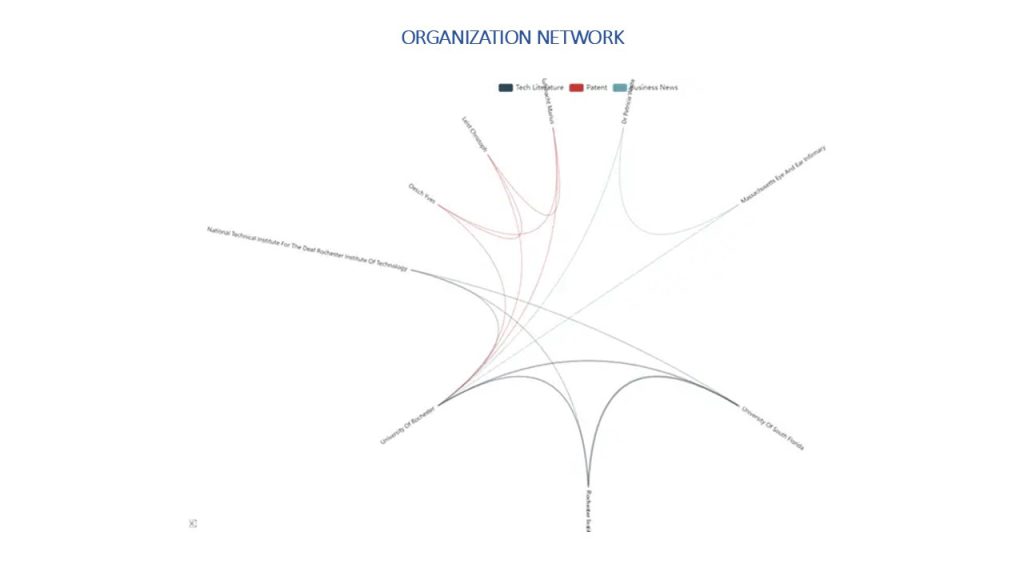
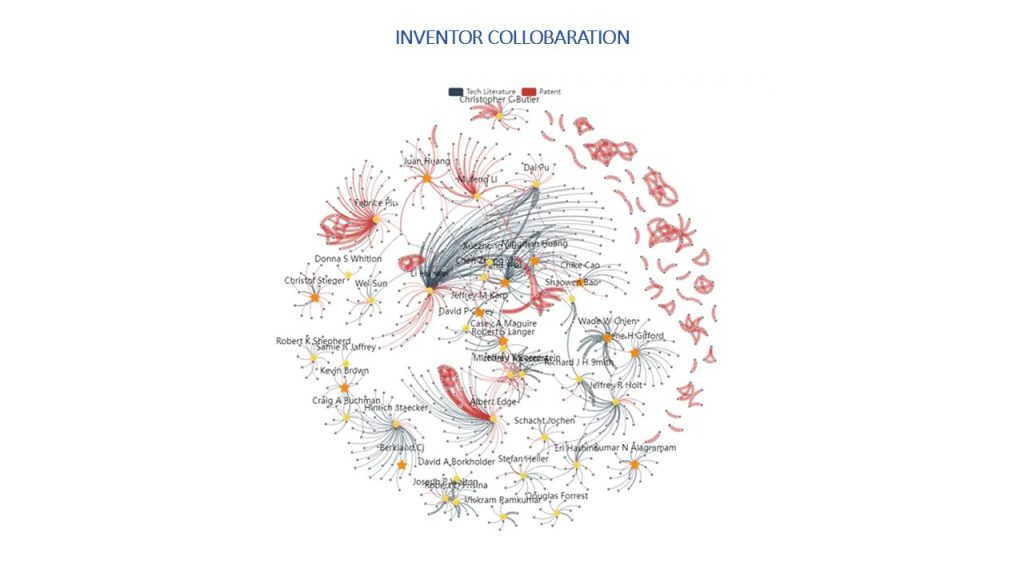
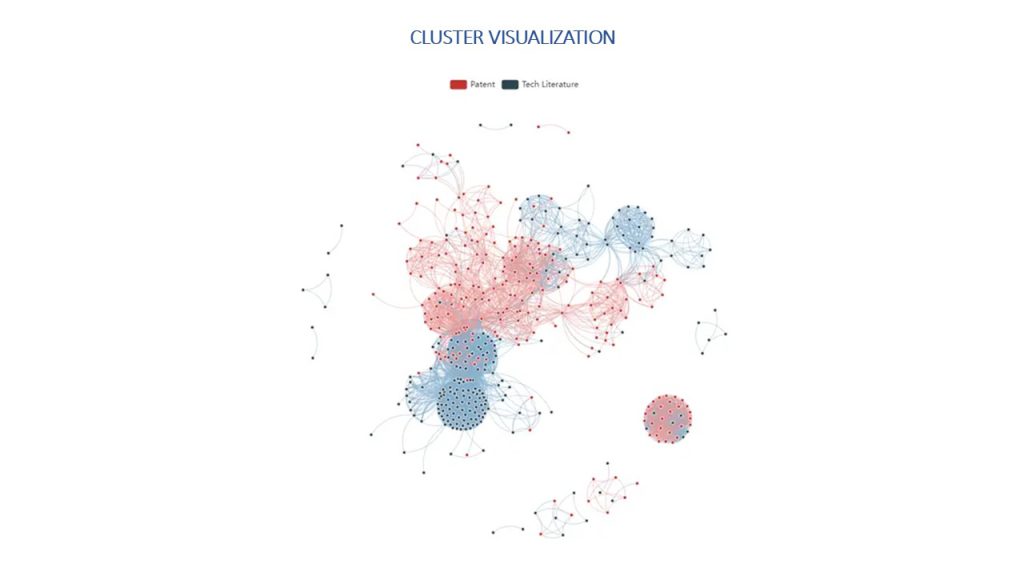
  • Custom-curated visualizations: The platform generates technically meaningful, interactive visualizations that adapt dynamically based on applied search filters.
  • Easy-to-use search interface: Designed for both scientists and portfolio managers, the interface makes it simple to navigate large datasets and surface key findings fast.
  • Linkage across data sources: By connecting multiple data sources, the platform makes relationships and patterns easy to see and explore — giving users a fully connected view of the landscape.
  • Additional customizations: Beyond standard features, teams can request scope modifications or direct analyst clarifications, making the platform flexible as project needs evolve.

Who Uses CONNECT-THE-DOTS?

Today, clients across industries rely on CONNECT-THE-DOTS for a wide range of strategic purposes, including:

  • Identifying new and disruptive approaches to solving technical problems
  • Finding potential research and development partners
  • Spotting Key Opinion Leaders, Rising Stars, and promising start-ups
  • Analyzing competitor intent and technology direction
  • And much more
Searches you can rely on

We deliver high-quality, and tailored searches. We consistently uncover invalidating art for tough claims, which speaks to our search rigor.

  • Database Access

    With over 22 years of experience, we excel in searching industry-leading patent, chemical structure, technical literature, and business databases.

  • Subject matter expertise

    Backed by 20+ years of expertise across fields like chemicals, electronics, and pharmaceuticals, our team delivers unmatched, high-impact results.

  • Deep Web Research

    Our unrivaled deep web crawling sets us apart—our expert data engineers work with subject specialists to uncover and access critical, targeted information.

  • Discovery Partner

    Through close collaboration with clients, often litigating attorneys, our searchers uncover invalidating references, making us a trusted discovery partner—delivering value far beyond typical search firms.

Give us a try. Let’s get started

our approach

How we meet your need

  • your-request

    Your Request

    • Question you are trying to answer
    • Type of search or analysis
    • Turnaround time and budget constraints, if any

  • Scope-and-timing

    Scope & Timing

    • Our proposal
    • Scope understanding
    • Search / analysis strategies
    • Examples
    • Cost and turnaround

  • Results-and-dicussion

    Results & Discussion

    • Preliminary results
    • Scope adjustments, if any
    • Discussion & iteration
    • Final report timing

  • Final-report

    Final Report

    • Final report with conclusions
    • Invoice submitted

Case Studies